
Reboot in Recovery Mode
Before the web lived in our pockets, the household computer was a weather system we all learned to read. It was a box in the corner that made small mechanical sounds, coughs and sighs that belonged to the whole room. People gathered around it the way you gather around a kettle: a parent printing a recipe, a cousin saving a school project, a kid trying to launch a game that had to be coaxed into starting. It was pre-internet time: no instant answers, no updates streaming in, only the slow choreography of disks, cables, and patience.
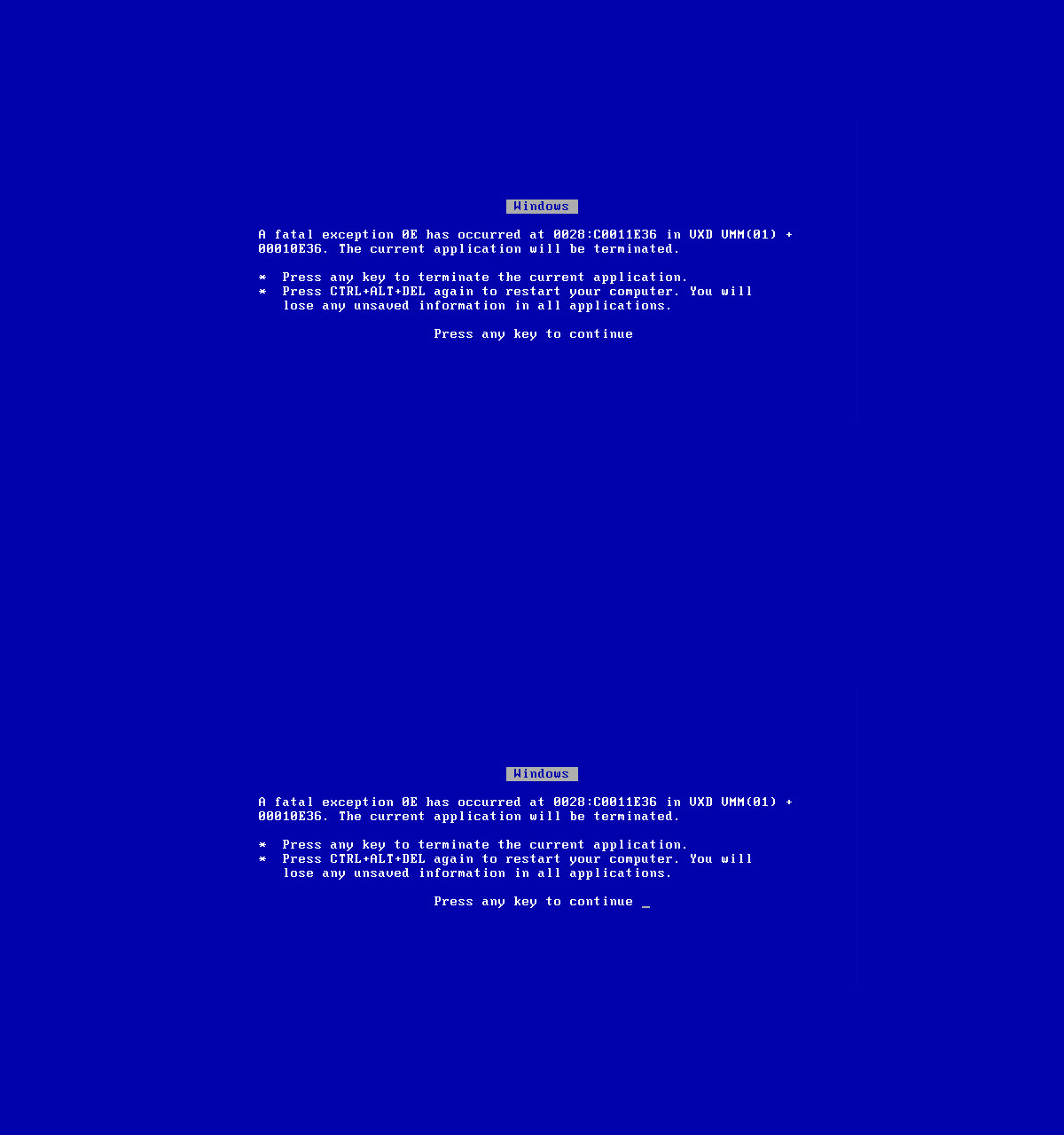
Sometimes a message would appear:
“Restart in recovery mode.”
That question turned afternoons into a collective pause. Somebody would ask out loud. Someone else would say yes because it felt like the polite thing to do. We all watched while the screen went quiet and the machine reassembled itself into a slightly different atmosphere.
It came back almost the same. Same wallpaper, same icons and yet there was a soft wrongness to it. Colors seemed flatter, as if the screen had chosen to speak in lower volume. The cursor moved like it had remembered a slower life. A few programs would refuse to be found. Some games would pop up that stern little message: “Not available in recovery mode.” The things you expected to be there were there, but a few small delights had been put away, like cups in a cabinet during a storm.
We were not alarmists. We didn’t name it or explain it. We tapped keys, we waited, we made tea. The adults shrugged in the way adults did with small technological mysteries and the kids rearranged their expectations: play this instead, read this now, wait five minutes. There was a gentle, communal acceptance. The machine was functioning, just not all at once.
There’s a tenderness to that memory I keep returning to. The computer’s quieter mode never felt like failure. It felt like a choice the machine made to strip away some things, to run lean for a little while. The world of the desktop narrowed and we, somehow, narrowed with it. We did different, smaller things. We spoke softer words at the table. We let certain noises not be filled.
And then, when it wanted to, the system would boot back into its ordinary fullness. The colors would come back as if someone had tuned a radio, programs returned from invisible holidays, and games slid back into the startmenu like it had simply been taking a breath. Someone would click on a song and the speakers would seem brighter. Nobody made a fuss, everybody noticed. The little restoration felt like an ordinary miracle.
I like to think about that now and wonder whether that dim, patient pause was, in its own way, a kind of intelligence. That for moments when the world could only manage a limited palette, the machine gave itself permission to show up differently, and then, when it was ready, to show up fully again. It might have been the smartest operating system we ever had.
When I imagine the room now, the same hum, the same slow return of color, I feel a strange warmth. There is something generous in a thing that knows how to be less for a while and not be ashamed of it. We learned, without lectures or labels, that a whole can include quieter parts. We learned to recognize the soft shape of recovery, and to be kinder in its presence.